🏢 Top Five 26.24

👋Welcome to the Top Five, a weekly newsletter by Jed Byrne that demystifies Raleigh development. If a friend sent you this email, you can subscribe below!
Good morning!
Book Recommendation
I used the following photo (socks and all) to recommend There’s No Place For Us to a friend this weekend, and I’m recommending it to you as well!
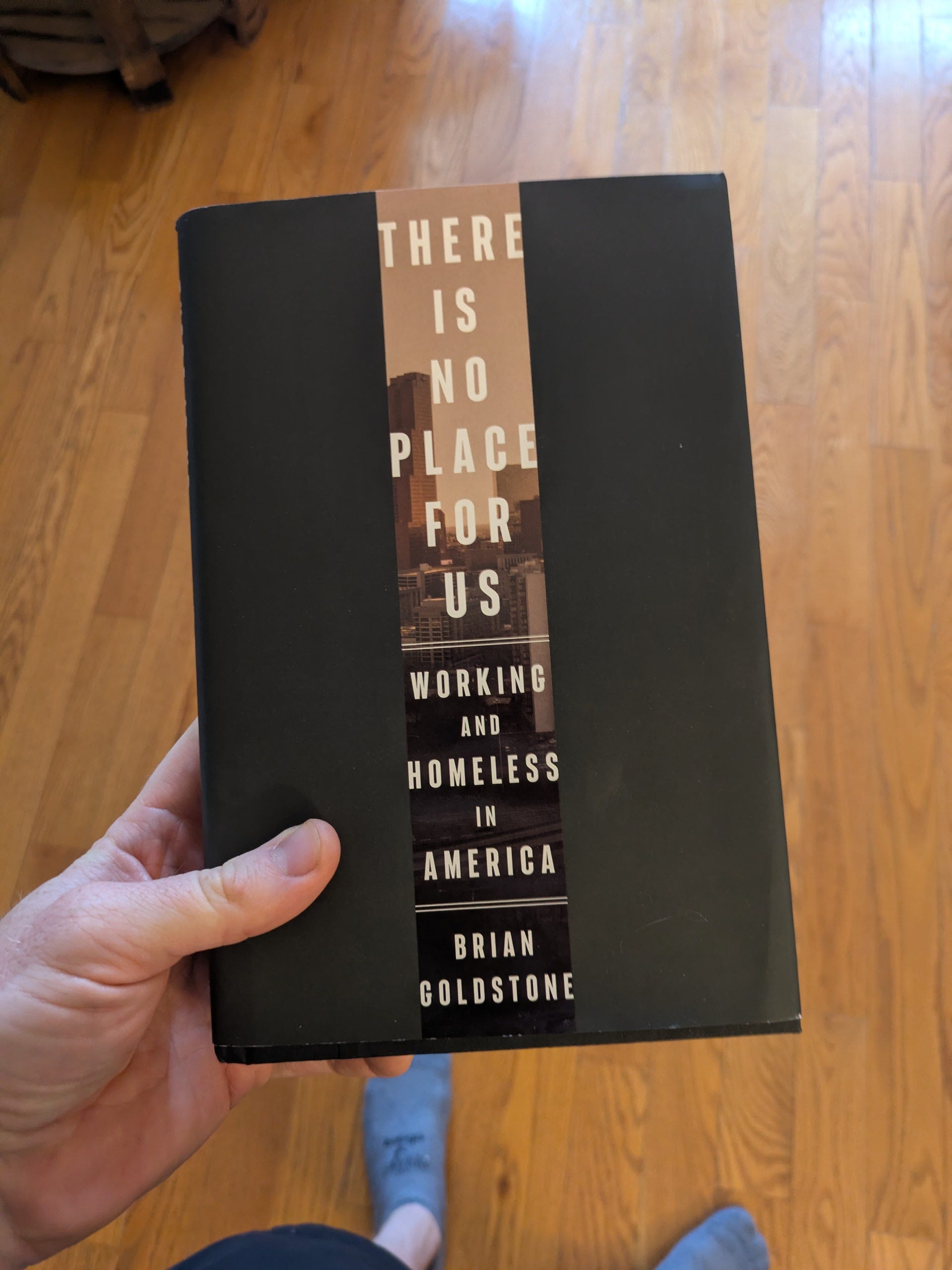
The book is a case study on housing and homelessness in Atlanta, but I think it applies directly to Raleigh as well. For renters, real estate value increases usually translate directly to rent hikes. When rent hikes increase faster than incomes, renters lose options.
In this case the families showcased in the book don’t always wind up sleeping on the streets. They move to expensive and poor quality extended stay hotels, or they wind up couch surfing (kids and all) with whoever will take them in.
Because they technically have a place to sleep, these families are also not necessarily considered homeless. If they aren’t considered homeless it’s harder to get assistance and the homelessness statistics we read about are skewed (way) low.
The Rent Increase/Supply Spectrum
When we bought our home in 2016 it was located in a slightly above median neighborhood and valued at a slightly above median (~115% of median) value. 10 years later, nothing has changed.
My home is still located in a slightly above median neighborhood and valued at a slightly above median (~115% of median) value. But now, that value is 85% higher than it was 10 years ago. Inflation over the same period is up 38% and Raleigh median income is up 46%. In the 10 years prior (2006-2016) the same home increased 10% in value.
To be clear, I did nothing to increase the value of my home. The value went up because demand for homes like mine exceeds supply of homes like mine.
It seems to me that if we want to keep rents (and home prices) affordable for the most vulnerable we need to absorb demand in more expensive areas. If we made more room for more people in my neighborhood, price/rent pressure will be reduced in less expensive neighborhoods. Even if landlords are greedy, they won’t have the option to increase rent…
We are looking to increase subsidies for affordable housing (yay! see below). Those subsidies will go further if we also stop depressing increased supply (or even encourage supply, like with the Jiko Development below) higher up the pricing/rent ladder.
When demand to live in an area increases, the change is either absorbed by rent increases, supply increases, or somewhere along that spectrum. No change is not an option when demand increases.
If you have any thoughts on the matter, feel free to reply (or call/text me at 980-428-4591). I’d love to get your perspective and improve my thoughts on the matter.
Best Regards,
Jed Byrne
Oak City CRE, LLC
On to the Top Five! ⤵️

1) Density Bonus: Density Bonus regulations in Raleigh allowed Jiko Development to build 21 condos on less than half an acre. Market rate units range from $395K-$530K. If more projects like this were allowed in my neighborhood they might be more pricy than in Southeast Raleigh, but they’d be way less expensive than the $800K townhomes and $1.9M single family homes currently being built near me.
2) Affordable Housing Bond: Check out where the dollars from the last affordable housing bond went, and where the dollars from the next bond are planned for.
3) Pullen Park: Pullen Park has a 1988sf cafe space and is looking for a vendor. Is it you?
4) Flowers Cottage: The Dix Park Conservancy announced revelry in an email (no link) that Flower Cottage will have an opening date soon. Check out the updates that are forthcoming.
5) Rezoning: The City of Raleigh approved a rezoning on Martin Street that will allow Turnbridge Equities to build up to 20-stories. The zoning will allow for up to 434 apartments, 418Ksf of office and 31Ksf of retail.